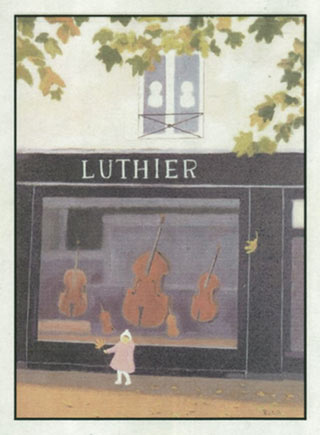
luthier
n : a craftsman who makes stringed instruments
(as lutes or guitars or violins)
lu·thi·er
n.
One that makes or repairs stringed instruments, such as violins.
[French, from luth, lute, from Old French lut ]
We set up and repair any stringed instrument from double-bass to ukulele
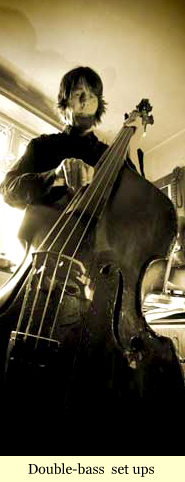
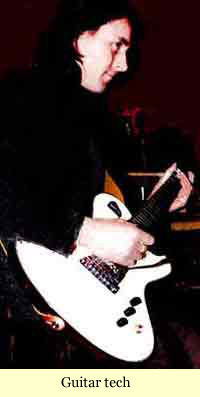
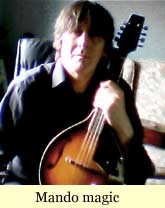


over the years we have mended or set up all of these stringed instruments:

and most recently -
A Bolivian Charango made from an Armadillo shell.
The owner told me that he got it in Bolivia after
successfully completing
some hostage negotiations!
Had to replace the top - very difficult - the armadillo was most uncooperative.


How to string a guitar to get
Pat Metheny's
" Baritone Nashville tuning
"
The tuning from top to bottom goes A-E-C-G-D-A
with the middle two strings tuned an octave higher than the rest.
This means that in terms of chord shapes it is just like conventional tuning
but the voicing of chords is much different and obviously the overall tonality
is lower and kind of wider.
It's great fun to play with and definitely not just for jazzers - blues
sounds great in this tuning - as long as you can leave out all your usual
lead runs as they can sound a bit odd when you jump an octave.
To hear a quick sample of me doing some fingerstyle noodling with this tuning
go here .
These are the string gauges I used to do my conversion.
from top to bottom.
A = 16
E = 28 wound
C = 14
G = 26 wound
D = 56 wound
A = 80 - this is an A bass string which I converted by removing the bass
ballend and replacing it with a guitar one, and also removing some of the
wrap at the machine head end in order to get the string through a guitar
machine post
This setup is for an acoustic guitar and I just found that the bass string
gave a better sound - you could use a heavy guitar string such as those
in a 7string or baritone set particularly on electric guitar.
Now the tricky bit:
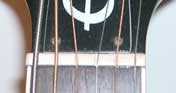
You need to
enlarge the nut slots for the outside four strings
(you could do this yourself but it's a little bit hazardous and you
might want to entrust this job to your local luthier)
For some other interesting tunings see my Tunings
page